
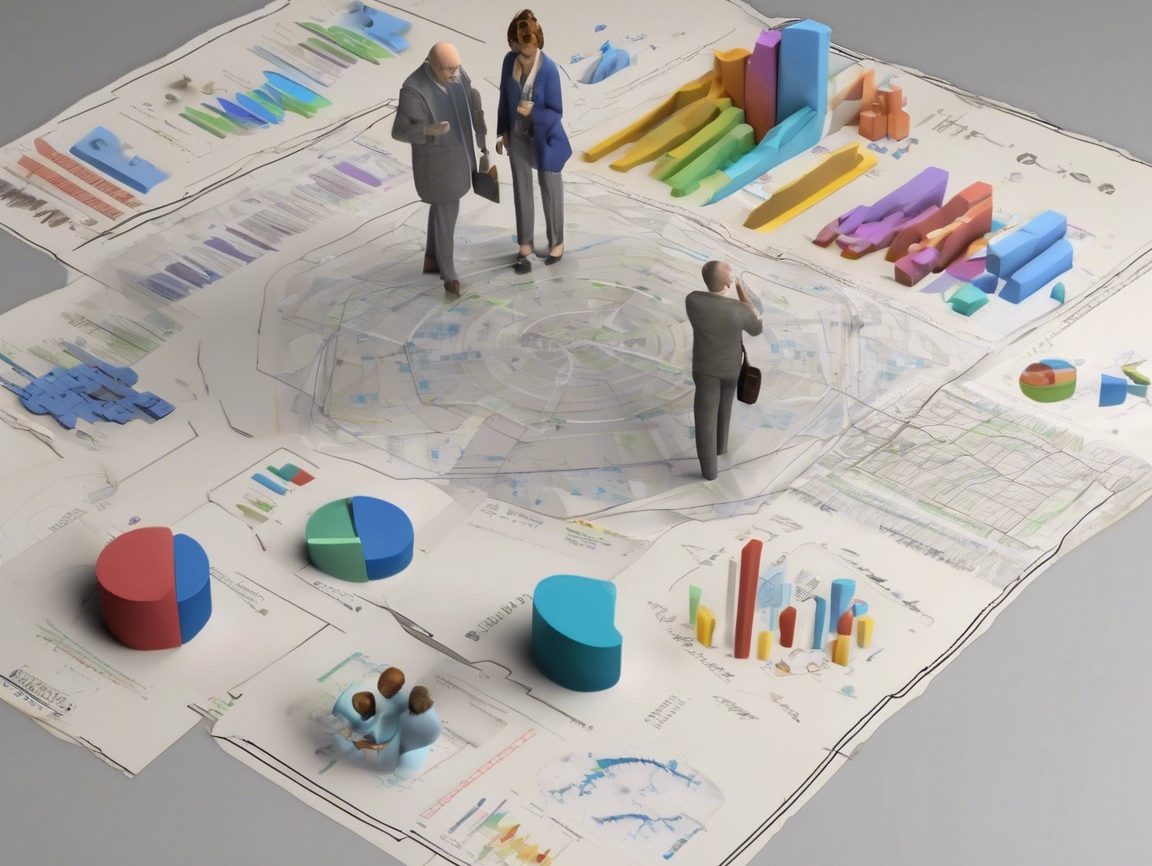
Social Sciences, History, and the AI Advantage: Using Artificial Intelligence to Understand People and the Past

September 3, 2025
Introduction
Social sciences and history are about one thing: understanding human behavior across time, culture, and society. Traditionally, this has meant reading texts, conducting surveys, and analyzing trends. But today, artificial intelligence (AI) is opening new doors for researchers, policymakers, and professionals in these fields.
For students majoring in psychology, sociology, political science, economics, anthropology, or history, learning AI isn’t about replacing classic methods—it’s about enhancing them. With AI, you can analyze millions of data points at once, uncover hidden patterns, and generate insights that would take humans decades to find. Adding AI to your degree will position you as a forward-thinking social scientist, ready to make an impact in policy, research, or industry.
How AI is Transforming Social Sciences and History
Human society generates oceans of data every day—tweets, surveys, voting records, census reports, streaming habits, online purchases, and more. AI tools allow us to organize, interpret, and predict human behavior from that data with unprecedented accuracy.
Here’s how AI is driving transformation in this field:
- Big Data Analysis
- Sociologists can use AI to process massive survey datasets, finding correlations between income, education, and well-being.
- Political scientists can analyze election data across decades and predict turnout trends.
- Natural Language Processing (NLP)
- Historians use AI to digitize and interpret centuries-old documents.
- Social scientists apply NLP to analyze political speeches, news archives, or social media sentiment.
- Predictive Modeling
- Economists rely on AI to forecast inflation, unemployment, or market behavior.
- Policy researchers use AI to simulate how a new law might impact different groups in society.
- Cultural Analysis
- Anthropologists use AI-driven pattern recognition to study languages, migration trends, and even ancient DNA.
- AI tools can analyze art, music, or literature across centuries, providing fresh perspectives on human creativity.
Real-World Use Cases of AI in Social Sciences and History
As a student, you might not yet realize how closely AI is tied to your field. Here are a few real-world applications:
- Political Science: Campaign teams use AI to micro-target voters, analyzing social media posts and demographic data to predict voter preferences.
- Sociology: AI helps study social inequality by linking housing data, crime rates, and education outcomes across neighborhoods.
- Economics: Central banks use AI to model global trade flows, assess risk, and guide monetary policy decisions.
- Psychology: AI-driven sentiment analysis tools measure collective emotions during crises (like pandemics or natural disasters).
- History: AI digitizes and translates ancient manuscripts, making historical records accessible worldwide. Projects like Transkribus use AI handwriting recognition to decode centuries-old archives.
Student Roadmap: How to Learn AI as a Social Sciences or History Major
Unlike STEM-heavy majors, you don’t need to dive deep into coding to benefit from AI—you just need practical literacy in the tools that apply to your research. Here’s how you can start:
- Learn the Basics of Data Analysis
- Take an intro course in Python or R (many universities offer these for non-computer science students).
- Learn to clean and interpret datasets using tools like Excel, SPSS, or JASP, then layer AI concepts on top.
- Get Comfortable with Text and Language AI
- Learn the basics of NLP, which powers sentiment analysis and text mining.
- Explore free tools like Voyant Tools for text analysis or experiment with Python’s NLTK library.
- Practice with Public Datasets
- Download open datasets like the U.S. Census, UN data, or historical archives.
- Try running AI-driven sentiment analysis on Twitter discussions of major social events.
- Use Visualization Tools
- Learn how to present complex data visually with Tableau, Power BI, or even Python visualization libraries (matplotlib, seaborn).
- Storytelling with data is critical in the social sciences.
- Work on Projects
- Analyze how media coverage changes public opinion using AI-driven text mining.
- Build a predictive model to forecast election outcomes in a specific state.
- Digitize and classify historical documents with AI handwriting recognition.
- Internships & Experience
- Look for internships in think tanks, NGOs, or government agencies that analyze social data.
- Volunteer with digital history projects or social policy labs at your university.
Why AI Will 10x Your Career in Social Sciences or History
Adding AI to your social sciences or history degree gives you a competitive edge that few graduates in these fields currently have:
- Expanded Research Power: You can analyze more data in weeks than researchers used to manage in years.
- Policy Influence: Governments and NGOs increasingly use AI models to guide policy decisions. With AI skills, you’ll be part of shaping real-world change.
- Job Market Edge: Employers in market research, public relations, consulting, and academia value candidates who can combine human insight with machine intelligence.
- Cross-Disciplinary Flexibility: AI opens doors to adjacent fields like behavioral economics, digital humanities, or computational sociology.
Conclusion
At its core, social sciences and history are about making sense of humanity. AI doesn’t replace that mission—it supercharges it. With AI, you can uncover patterns in society, predict future trends, and bring hidden stories of the past to light.
As a student, the earlier you learn to harness AI tools, the more prepared you’ll be to enter a job market that rewards analytical thinkers who can combine human empathy with data-driven insights.
That’s the DegreePlus.AI advantage: merging social insight with artificial intelligence to better understand the world and shape the future.