
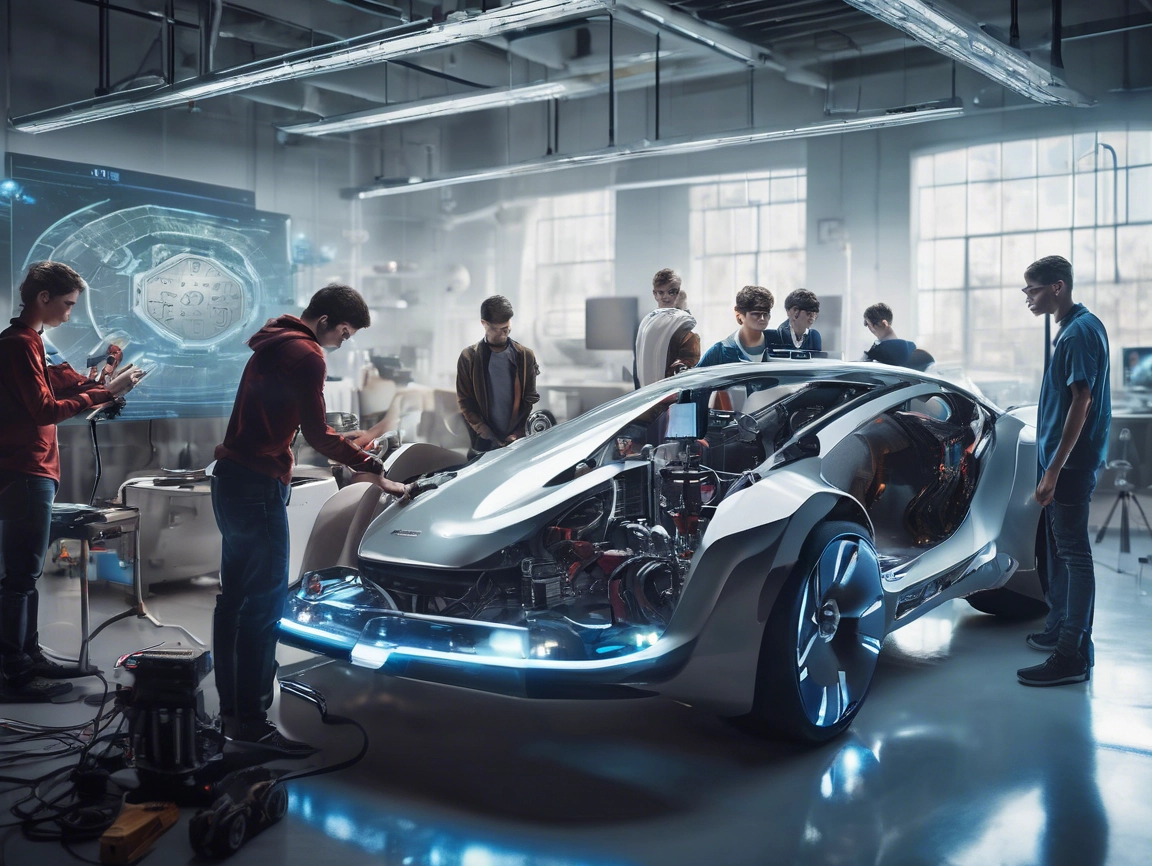
Driving Innovation: Merging Mechanical Engineering, Automotive Expertise, and AI

September 2, 2025
Mechanical engineering has always been at the heart of innovation—designing machines, engines, and systems that power industries and shape our daily lives. But as the world shifts toward smart vehicles, electrification, and intelligent manufacturing, tomorrow’s engineers need more than traditional skills. They need a blend of mechanical engineering fundamentals, specialized automotive expertise, and artificial intelligence (AI) literacy to stand out in the workforce and lead the next wave of technological change.
In this post, we’ll explore how mechanical engineering students can earn an automotive certificate, why it matters, and how to infuse AI skills into their education to gain a competitive edge.
Why Add an Automotive Certificate?
An automotive certificate builds practical, job-ready expertise that complements your mechanical engineering degree. These programs typically focus on:
-
- Powertrain and drivetrain systems – Internal combustion engines, hybrid systems, and EV motors.
-
- Vehicle dynamics and design – Suspension, aerodynamics, and safety systems.
-
- Manufacturing processes – Automotive materials, assembly techniques, and quality control.
-
- Emerging technologies – Electric vehicles (EVs), autonomous driving, and smart mobility.
Most universities (including UTA, UMich, and others) offer automotive-focused certificate programs as add-ons to an engineering degree. Completing one signals to employers that you’re not only strong in core mechanics but also specialized in an industry undergoing massive transformation.
Where AI Comes In
AI is no longer just for computer scientists—it’s reshaping mechanical and automotive engineering, too. Engineers who understand AI can:
-
- Analyze big data from vehicles to improve efficiency and predict maintenance.
-
- Develop intelligent control systems for EVs, autonomous vehicles, and robotics.
-
- Use AI-driven simulation and design tools to optimize prototypes faster.
-
- Enhance smart manufacturing with predictive analytics and machine learning.
Employers increasingly seek engineers who can bridge the gap between mechanical design and digital intelligence.
A Roadmap for Students
If you’re a mechanical engineering student aiming to merge automotive expertise with AI skills, here’s a step-by-step path:
1. Earn the Automotive Certificate
-
- Enroll in your university’s certificate program (or a similar track if offered).
-
- Focus on hands-on labs and projects—designing components, analyzing systems, and working on real vehicles.
-
- Consider student competitions like Formula SAE or Baja SAE, where you can apply classroom theory in high-pressure, team-based projects.
2. Build Core AI & Programming Skills
-
- Learn Python—the universal language of AI and data science.
-
- Take online courses in machine learning, data analytics, and AI for engineers (Coursera, Udemy, edX).
-
- Explore AI tools widely used in engineering, such as MATLAB, TensorFlow, and Simulink with AI add-ons.
3. Apply AI to Automotive Projects
-
- Use AI to analyze vehicle performance data in class projects.
-
- Build predictive maintenance models with machine learning.
-
- Experiment with AI-based simulations for design optimization or autonomous driving systems.
4. Get Industry Experience
-
- Seek internships with automotive or aerospace companies that are integrating AI (Tesla, GM, Toyota, Boeing).
-
- Join research labs at your university working on autonomous vehicles, robotics, or smart manufacturing.
-
- Network with professors and industry professionals in AI + engineering fields.
The Payoff: Career Opportunities
By merging mechanical engineering, an automotive certificate, and AI skills, you’ll position yourself for cutting-edge careers, including:
-
- Automotive systems engineer for EVs or autonomous vehicles.
-
- Data-driven design engineer using AI for simulation and testing.
-
- Robotics and intelligent manufacturing engineer.
-
- R&D engineer for smart mobility solutions.
These roles not only offer higher earning potential but also place you at the forefront of engineering innovation.
Final Thoughts
The future of mechanical engineering isn’t just about gears and engines—it’s about intelligence, adaptability, and innovation. By strategically adding an automotive certificate and AI expertise, you can transform your degree into a launchpad for some of the most exciting and high-paying careers of the next decade.
Your engineering journey doesn’t have to follow a traditional path—infuse it with AI, and you’ll be driving innovation in every sense of the word.